Your Website Might Be Losing You, Customers. Here’s How to Spot It
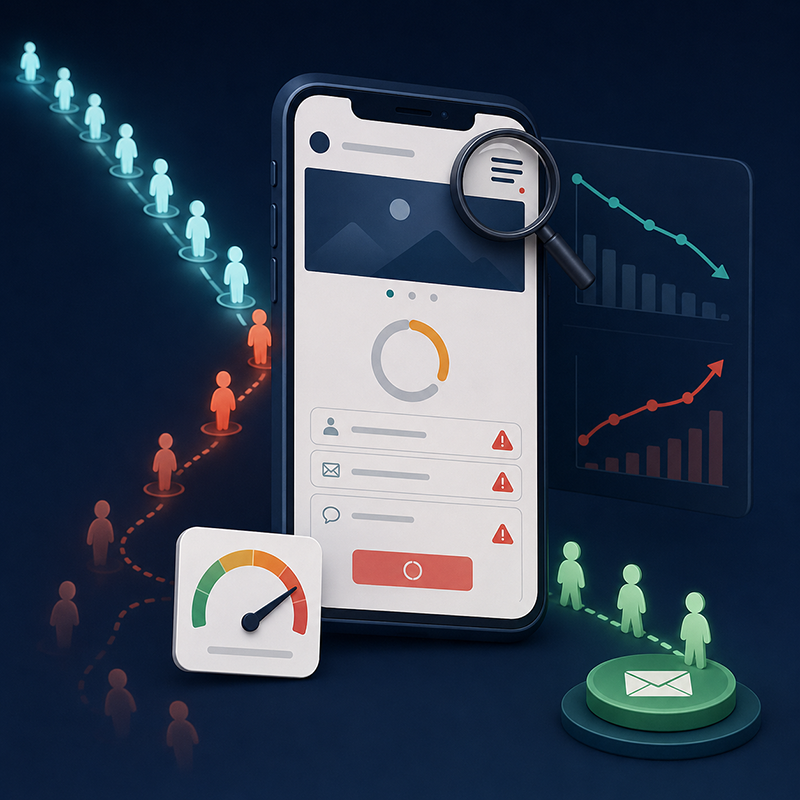
A customer finds your business on Google. They tap the link. The page takes a few seconds to load, the menu doesn’t quite work on their phone, and they’re gone before they’ve read a single word.
You never see that moment happen. Not a single email arrives to tell you a sale just walked out the door. It just does, quietly, every day, until you start asking why enquiries have slowed down while your competitor’s phone keeps ringing.
That’s the unpleasant truth about a website losing customers: it rarely announces itself. It shows up as a slow month, a quiet contact form, and a slightly lower position in Google. Many Irish business owners we talk to assume the problem is their offer, their pricing, or the market. Often, it’s none of those things. It’s the website itself, quietly turning people away before they ever get to hear what you actually do.
We’ve spent over 24 years building and rescuing websites for Irish businesses, and the pattern repeats itself constantly. So let’s walk through exactly how to spot it.
Why a Website Losing Users Doesn’t Look Like an Emergency
A website losing users rarely looks dramatic. Small frictions, like slow pages or a confusing menu, chip away at trust every day. There’s no crash or alert, just a quiet, steady drop-off that finally shows up in your monthly enquiry numbers.
- Silent frustration: A slow page or awkward mobile menu makes visitors leave without complaint, so you never see the moment it happens.
- Cumulative drag: Each small friction costs a few visitors. Together, they quietly turn into a steady decline in enquiries and sales.
Five Signs Your Website Is Quietly Costing You Business
These are the signs we look for first when a client says something feels “off” about their enquiries.
1. Your page takes too long to load
Google’s own research has long shown that as page load time increases from one second to five seconds, the probability of a visitor bouncing rises sharply. A slow website doesn’t just annoy people; it actively pushes them back to the search results, straight to a competitor.
Test it yourself: open your homepage on your phone using mobile data, rather than office WiFi. How long it take before you can actually read the headline? If it’s more than three seconds, you’re losing people right there.
2. Visitors leave within seconds (high bounce rate)
Your website bounce rate tells you what percentage of visitors land on a page and leave without clicking anything else. A high bounce rate on your homepage or key service pages is one of the clearest signals of poor website user experience.
A high bounce rate usually means one of three things:
- The page doesn’t answer the question the visitor searched for
- The design looks dated or untrustworthy at first glance
- The layout is confusing, so visitors can’t find what they need quickly
3. Your site doesn’t work properly on mobile
More than half of web traffic in Ireland now happens on a phone. If your menu overlaps text, your buttons are too small to tap accurately, or your images take over the screen, you’re merely just creating an inconvenience. You’re actively driving people away on the device that most of them are using.
4. Your contact form gets clicks but no submissions
This one is sneaky. Your analytics might show plenty of people reaching your contact page. But if the form itself is long, asks for unnecessary information, or simply fails to send on certain browsers, you’ll never know how many enquiries quietly disappeared into a broken submit button.
5. You rank well, but nobody enquires
This is the one that frustrates business owners most. Your SEO performance looks solid. You’re on page one for the terms that matter. And still, the phone doesn’t ring. That combination almost always points to the website itself, instead of the ranking. Getting found and getting chosen are two different jobs, and a website can do the first brilliantly while failing completely at the second.
The One Factor Many Businesses Overlook: Your Domain Name
Your domain name works before a single page loads. Seen in a search result or heard aloud, it’s the first trust signal a visitor gets, and a clumsy one creates doubt before your website even opens.
We’re an ICANN-accredited registrar, so we manage domain registration directly. A short, clear .ie an address builds recognition instantly and is easier to remember than a long, generic one. More on this in why your domain name can make or break your business.
- First impression, no second chance: A domain seen for half a second in a search result or heard once on the phone shapes trust before your homepage ever has the chance to load.
Why These Problems Get Missed for So Long
Business owners look at their own website differently than a stranger does. You know where everything is. You know the menu takes a second to load because you built the site three years ago and haven’t questioned it since.
A first-time visitor doesn’t have that patience. And here’s the harder truth: Google Analytics will show you the numbers (bounce rate, session duration, pages per visit), but numbers alone don’t tell you why someone left. You need to actually use your own site the way a stranger would, on a phone, with average WiFi, searching for the things you offer.
What to Do First
Before jumping straight to improve website conversions, start with a proper audit. An actual look at load speed, mobile behaviour, and where visitors are dropping off in your analytics.
A quick self-check you can run this week:
- Load your homepage on mobile data and time it
- Fill out your own contact form from a phone, start to finish
- Check your bounce rate in Google Analytics for your three highest-traffic pages
- Ask someone outside your business to find your contact page without any help from you
If any of those steps feel harder than they should, you’ve found your starting point.
When a Website Rebuild Actually Makes Sense
Not each and every problem needs a full rebuild. Sometimes a website rebuild service replaces a site that could have been repaired with faster hosting or a cleaner mobile layout. Other times, the foundations are genuinely holding the business back, and patching individual issues just delays the inevitable.
The honest answer depends on age, platform, and how much of the site was ever built with mobile users in mind in the first place. We’ve covered the signs worth watching for in more depth in how a website redesign can revolutionise your digital performance and, separately, in common mistakes businesses make when designing their websites, if you want to check your current site against known problem patterns first.
If speed is your main issue and the design itself is otherwise sound, it’s worth checking your hosting before committing to a full rebuild. We’ve written about this specifically in reasons Irish businesses switch to VPS hosting.
The Real Cost of Waiting
Every week a slow or confusing website stays live is a week of lead generation quietly underperforming, even while your marketing keeps working exactly as it should. The ads land. The SEO ranks. The handoff still breaks at the website itself, not because the offer failed, but because the destination wasn’t ready to receive the click it earned.
If any of the five signs above felt familiar, get a proper look before spending more on traffic. Get in touch and we’ll walk through it together.
Frequently Asked Questions
- How do I know if my website is losing customers?
Check your bounce rate, mobile load speed, and contact form completions in Analytics. A high bounce rate with low form submissions is the clearest warning sign. - What is a good bounce rate for a small business website?
Under 40% is strong, 40 to 60% is average, and above 70% usually signals a mismatch between what visitors expect and what they find. - How much does page speed actually affect conversions?
Significantly. Visitors are far more likely to leave a page that takes several seconds to load, especially on mobile data connections. - Should I rebuild my website or just fix a few pages?
It depends on the platform’s age and mobile readiness. Older sites often need a rebuild; newer ones may just need targeted fixes. - Does my domain name really affect customer trust?
Yes. A short, clear, relevant domain builds instant recognition, while a long or confusing one creates hesitation before the page even loads. - Why does my site rank well but still get no enquiries?
Ranking gets people to your site; design and clarity convince them to act. A gap here means the page isn’t converting visitors into leads. - How often should a business review its website?
At minimum, once a year, and immediately if enquiries drop, bounce rate rises, or mobile traffic behaves noticeably differently to desktop. - Can slow hosting really cause lost customers?
Yes. Shared or outdated hosting is a common, fixable cause of slow load times, which directly increases bounce rate and lost leads. - What’s the first thing I should check on my own site?
Load your homepage on mobile data and time it. If it takes more than three seconds, that’s likely costing you visitors already. - How do I get a professional website audit in Ireland?
Flo Web Design offers website assessments covering speed, mobile usability, and conversion barriers. Contact us to get started.